Is mathematics a force for accountability? Or is it a shield against accountability?
Our lives are increasingly governed by algorithms that influence what to buy, where to go, who to date, and sometimes even how we vote. Corporations and governments collect data about us and use it to analyze our personalities, our social ties, and our beliefs. Are the decisions made by these analyses fair? How much control do we have over the assumptions that algorithms make about us? Who creates and controls these algorithms, and how accountable are they to those of us on the receiving end?
I recently gave a talk to the Undergraduate Math Union at the University of Toronto to explore one instance of a mathematical algorithm used in Wall Street that enabled the 2008 Financial Crisis. It was manipulated by the "auditors of the financial system" to make over-optimistic predictions about the economy, helping large investment banks sell toxic investment products all over the world. The implosion of those toxic products sparked the Financial Crisis.
0 Comments
Why math and society?I am haunted by these existential questions:
What a real crazy time I had at the Bard Summer Theater Intensive! In the span of a month in Berlin, we students watched experimental theater, learned from theater and dance workshops, and composed original works. I'm quite proud of what my group came up with, so here it is!
(Photographs by Vera Yung)
As an origami practitioner, I asked myself:
What is the process of folding? And who is the folder, anyway?
I attempted to answer these question through my first-ever origami performance piece that debuted at the Make It Share It Open Stage.
(Photos: Beverly Yuan)
As an MIT undergraduate I'm fortunate enough to have served on the Committee on the Library System (CLS) from Fall 2016 to Spring 2018. It's been an incredibly empowering experience--having my voice being treated as an equal in the committee, and having my suggestions taken seriously. The faculty and staff in CLS have modeled for me how to be supportive and inclusive, and how to listen. Here is a reflection on those two years, for the committee, for future undergraduate representatives, and for myself.
Photos: Jonathan Sachs, MIT SHASS Communications
As an MIT freshman I was 100% sure that I would study math, but I mused about how funny it would be if I dropped all that for theater or some other drastic switch like that. Well, that didn't exactly happen, but over one and a half years I've discovered and developed an unexpected interest in acting.
This November, I acted in my first-ever play: Everybody, an existential dark comedy about finding somebody to die with you. This contemporary adaptation of the fifteenth-century morality play The Summoning of Everyman inaugurated MIT's new theater building (MIT News). Its underlying narrative appears in many cultures: a journey towards death, in which the protagonist learns that they cannot bring their possessions and people with them—except for one, which teaches them what is most important in life. I learned so much from my director Anna Kohler and my wonderful fellow actors! Here is a (private) clip from my performance, followed by a reflection on the creative process as an actor. This is an exploration of some interesting parallels. One might say that the categories of geometry and algebra cover most of mathematics. I think most mathematicians see them not as categories but as different ways to see the same object. Time and again, geometric intuition uncovers hidden dimensions in algebraic objects: the algebraic geometric of elliptic curves, as well as the standard practice of studying a large set of functions by considering each function as a point in a "function space," serve as ready examples. On the other hand, geometric spaces that we're interested in, such as the fabric of space-time, or crystal lattices, often have underlying symmetries that can be encoded as algebraic structures which afford us a compact, high-level language to state and prove far-reaching claims on the properties of the geometry.
Why are these two viewpoints so effective, so illuminating, so incisive? If we see geometric intuition as an extension of our human capability for spatial visualization and reasoning, then I'd say that's a pretty fundamental source for geometric intuition—an internalization of our everyday visual and tactile interaction with out environment. What about algebra then? We could tie it to our faculties of language, which associate meanings to symbols or strings of them (literally called a word in group theory), communicate that meaning, and process the information in the symbols by manipulating them. We really do have a "language of algebra." So the first parallel goes from geometry and algebra to spatial reasoning and linguistic ability.
But I like to go even further, rise higher in abstraction: is there any more fundamental difference, or similarity, between our faculties of spatial reasoning and language? How about space vs. time? Obviously geometry is space. If we think of multiplication in algebra as composing transformations one after the other, such as the linear transformations in linear algebra (Cayley's theorem guarantees that we can view any group as a transformation group), then algebra is a form of "discrete time travel." What about other fields of math? If geometry is space and algebra is time, then perhaps analysis is change, and topology is connection. I'm honored to serve as the undergraduate representative on MIT's Task Force on Open Access. Some have asked me, "what is open access?" Among many things, Open Access (OA) aims to make research free to access, distribute and build on top of. One might call it a "Creative Commons or Free Software movement for research." This post gives a brief overview, but I'd be excited to answer your questions about anything OA! Why don't we already have OA? Mainly because the majority of scholarly peer-reviewed articles are published in academic journals, ~75% of which with charge steep subscription fees (i.e. "toll access") [1]. In 2016 the MIT Libraries paid over $6 million to give MIT affiliates free access to some subset of journal articles [2]. Is journal pricing "fair"? Some facts: The research community submits articles, peer-reviews them and serves on editorial boards, all for no pay from publishers, with university salaries from mostly public funding. Toll-access journals do copy-editing, formatting, marketing etc, but make disproportionate profits: Publishing giant Elsevier reported a profit margin of 36%, more than Google, Amazon or ExxonMobil [1,3]. Most subscription revenue comes from publicly-funded university libraries, whose budgets grow much slower than subscription costs. Small universities and research institutions, especially those from developing countries, are most vulnerable. Is OA only for journals? No, it can cover research datasets, course materials (like MIT OCW), digitized print work, source code, images and much more. For example, the Open Science Framework aims to make transparent and provide OA to every aspect of the research cycle. Science and humanities face similar issues in OA. OA can include all forms of content like novels, movies, software etc, but it's focusing on research because researchers want to distribute their results for free. How does this affect me? Besides ensuring your current and future access to scholarly publishing, access to the fruits of research should be expanded beyond the elite institutions that can barely afford the steep journal subscription fees, to developing countries, to precollege classrooms, and to non-researchers such as journalists and policymakers. That would be more equitable, and would accelerate innovation in science and the humanities. How can I help? I welcome you to learn more about OA by reading or attending conferences, and contribute to OA projects like the aforementioned Open Science Framework and Right to Research, or even organize an open access hackathon! Where can I learn more about OA? Jean-Claude Guédon's article "Open Access: Toward an Internet of the Mind" introduces the history, landscape and nuances of OA quite well. If it seems long, just read the bullet-pointed history starting from page 8 to see how we got here. Sources
My interest in art led me to take the Introduction to Art History course at MIT. I learned the most by thinking very hard about the essay assignments, one of which asked me to analyze the importance of authenticity in art--if it is important at all! We were to look at the case of the 17th-century Dutch painter Rembrandt van Rijn, because it had been notoriously hard to figure out which paintings were actually made by him. I spent way more time than necessary contemplating the issue and putting my thoughts together. Prof. Kristel Smentek, who taught the class, gave comments on drafts of this essay that guided how I developed it further. The essay recently won the Kelly Essay Prize for Excellence in Humanistic Scholarship. I hope you find it an intriguing read!
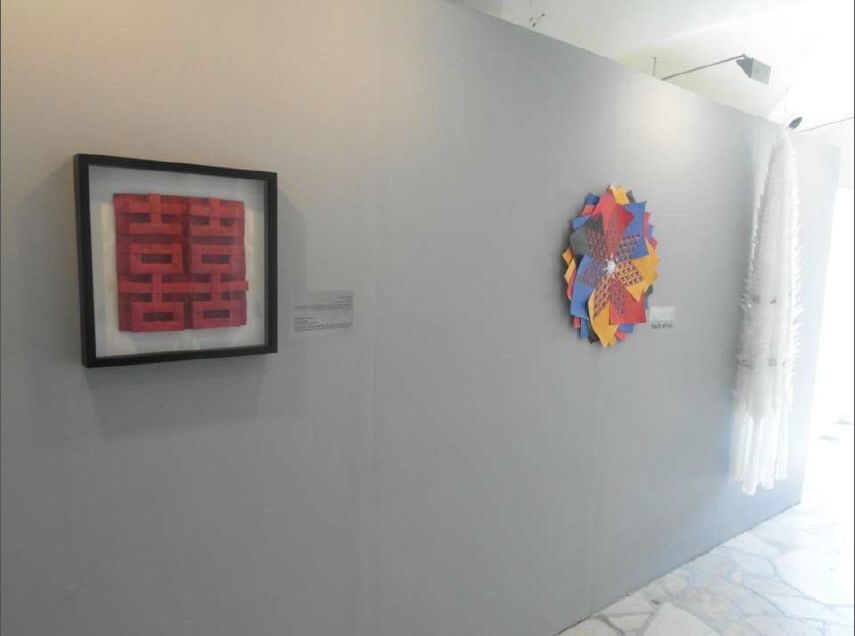
Check out the other amazing art pieces in the Jaffa Museum's abums below! Vincent Floderer's haunting "sea creatures" fashioned out of crumpled paper are some of my favourites.
|
Archives
December 2020
Categories
All
|
 RSS Feed